
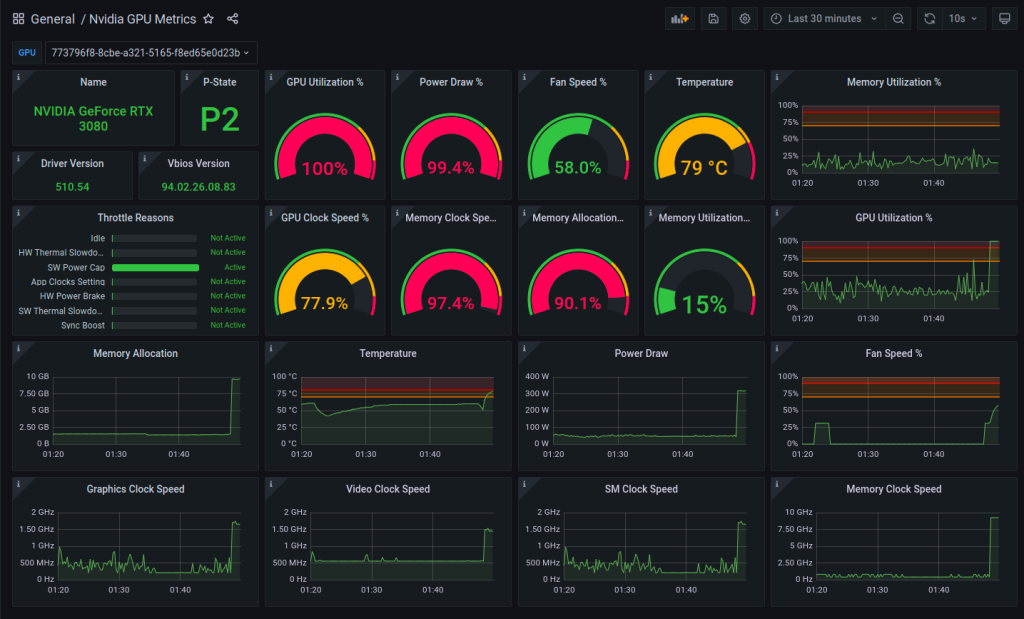
In the modern landscape of artificial intelligence, deep learning, and high-performance computing, managing GPU resources efficiently is critical for achieving optimal performance. As workloads become more complex and multi-GPU systems become more common, professionals require tools that provide detailed, real-time insights into GPU usage.
Nvitop has emerged as a powerful solution, offering continuous monitoring of memory and compute utilization at the process level, along with an interactive interface that simplifies multi-GPU management. Unlike traditional tools, Nvitop enables developers, researchers, and system administrators to track GPU performance dynamically, quickly identify bottlenecks, and optimize resource allocation, making it an essential component for modern GPU workflows.
The Growing Need for Advanced GPU Monitoring
GPUs are no longer just for gaming. They now power artificial intelligence, scientific simulations, real-time rendering, and complex data processing tasks. With the increasing complexity of workloads, traditional monitoring tools can fall short in delivering actionable insights. Professionals face challenges such as:
- Monitoring GPU usage for multiple processes simultaneously
- Detecting memory spikes and bottlenecks in real-time
- Managing multiple GPUs efficiently across large servers
- Identifying which process consumes the most resources
These challenges highlight the need for more sophisticated tools than nvidia-smi alone. While nvidia-smi Provides a basic overview of GPU usage, it often lacks the interactive and detailed functionality modern users require.
Introducing nvitop
nvitop is a modern, open-source GPU monitoring tool designed to address the gaps left by nvidia-smi. Unlike nvidia-smi, which generates a static snapshot of GPU metrics, nvitop continuously updates data in real time, and presents it in an interactive format. Its design focuses on process-level visibility, ease of use, and live monitoring, making it ideal for high-demand environments.
Key advantages of nvitop include:
- Real-time updates of GPU usage and memory consumption
- Detailed process-level monitoring for better traceability
- Interactive interface for sorting, filtering, and managing processes
- Improved visibility in multi-GPU setups
By addressing these needs, nvitop enhances productivity and reduces the friction of manual monitoring.
Limitations of nvidia-smi
Despite being the default GPU monitoring tool, nvidia-smi has several inherent limitations:
Static and Manual Monitoring
nvidia-smi outputs a snapshot of GPU usage at a single point in time. For continuous monitoring, users must manually rerun commands or set up repetitive scripts. This approach is inefficient and makes it easy to miss spikes in memory or compute usage.
Limited Process Details
While nvidia-smi can list running processes on GPUs, it does not offer in-depth metrics like memory or compute usage per process in a clear and readable format. This limitation becomes a problem when multiple processes share GPU resources, as identifying resource-heavy processes requires additional effort.
Poor Interactivity
nvidia-smi is a static text-based tool. Users cannot interactively sort, filter, or highlight processes based on real-time metrics. For long-running tasks or multi-GPU servers, interpreting output becomes time-consuming and prone to errors.
Multi-GPU Complexity
In servers with multiple GPUs, nvidia-smi displays long tables with repeated blocks of information, making it difficult to quickly assess workload distribution and GPU health. Balancing loads and identifying underused resources becomes a cumbersome process.
How nvitop Addresses These Challenges
nvitop was built to overcome these exact problems. It provides real-time monitoring, process-level insights, and interactive management, transforming the way professionals handle GPU workloads.
Real-Time Monitoring
Unlike nvidia-smi, which requires manual refreshes, nvitop continuously updates GPU metrics. Users can see live changes in memory usage, GPU load, temperature, and process activity. This real-time capability is especially valuable for training AI models or running GPU-heavy computations.
Process-Level Visibility
nvitop breaks down GPU usage per process, including:
- Memory consumed by each process
- GPU compute utilization per process
- Identification of processes by name and PID
This level of detail enables users to identify resource-intensive tasks and optimize workflows immediately.
Interactive Interface
With an intuitive, interactive terminal interface, nvitop allows users to:
- Sort processes by memory or compute usage
- Filter to specific GPUs or tasks
- Observe multiple GPUs simultaneously in an organized view
This interactivity simplifies monitoring in complex multi-GPU environments and reduces manual effort.
Benefits of Nvitop for Professionals
The advantages of using nvitop extend far beyond basic monitoring. Some key benefits include:
- Improved Resource Management: Quickly identify and address memory or compute bottlenecks.
- Enhanced Debugging: Detect processes causing spikes in usage or memory leaks.
- Time Efficiency: Reduce the repetitive manual work of running commands or scripts.
- Multi-GPU Optimization: Monitor GPU utilization across multiple devices for better load balancing.
By providing detailed, real-time insights, nvitop it empowers professionals to make informed decisions and streamline their workflows.
Practical Use Cases
AI and Deep Learning Training
When training deep learning models, sudden spikes in GPU memory or compute usage can lead to errors or slowdowns. nvitop allows developers to monitor these metrics live and adjust batch sizes, optimize code, or redistribute workloads before critical issues occur.
High-Performance Computing Clusters
In HPC clusters shared by multiple users, GPU resources can be overused or underutilized. nvitop provides clear visibility into which processes consume resources, making it easier to manage allocation and ensure fair usage.
Data Processing and Visualization
Rendering or processing large datasets often involves intensive GPU usage. nvitop enables users to track GPU performance in real time, identify bottlenecks, and prevent slowdowns during critical tasks.
Key Points of Comparison: nvitop vs nvidia-smi
Refresh Mode
- nvidia-smi: Manual or script-based, static output
- nvitop: Automatic, live updates with continuous monitoring
Process Detail
- nvidia-smi: Limited process-level visibility
- nvitop: Detailed per-process memory and compute metrics
Multi-GPU Handling
- nvidia-smi: Cluttered tables, hard to read for multiple GPUs
- nvitop: Organized, interactive view with sorting and filtering
User Interaction
- nvidia-smi: Static text, no interactivity
- nvitop: Terminal-based interactive interface, easy to navigate
These comparisons demonstrate why nvitop is better suited for modern GPU-intensive workloads.
Integration and Best Practices
To get the most out of nvitop, professionals should integrate it into daily workflows:
- Monitor model training sessions to detect memory or compute spikes early.
- Use process filtering to focus on specific workloads or GPU devices.
- Track GPU utilization trends to optimize resource allocation.
- Combine live monitoring with alerting systems to proactively respond to performance issues.
Using nvitop in this way ensures more efficient and predictable GPU operations.
Conclusion
Efficient GPU monitoring is no longer optional in the age of AI, deep learning, and high-performance computing. Nvitop has established itself as a modern, powerful tool that goes beyond traditional solutions by providing real-time, process-level insights, interactive monitoring, and simplified multi-GPU management.
Its ability to track memory and compute utilization dynamically allows developers, researchers, and system administrators to optimize workloads, detect performance bottlenecks early, and make data-driven decisions. By integrating Nvitop into daily workflows, professionals can ensure smoother operations, prevent resource conflicts, and maximize the efficiency of GPU-intensive tasks. In a landscape where every GPU cycle counts, Nvitop transforms monitoring from a static task into a proactive, insightful process.